Going Against the Grain: How Hayward's Reverse Commute Is Giving Residents Their Evenings Back

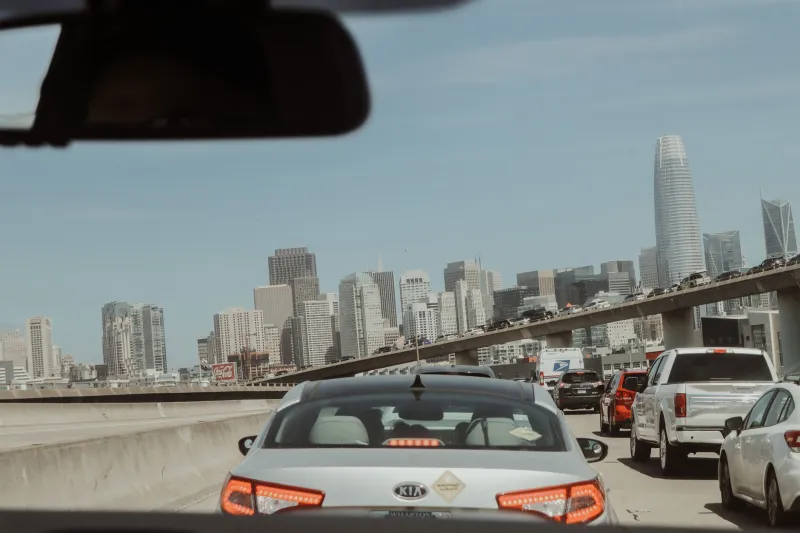
There's a rhythm to Bay Area traffic that most people just accept as part of life. Mornings push workers west and north. Evenings drag them back east. The freeways pulse like a tired heart, and somewhere in the middle of all that congestion, hours disappear.
But Hayward doesn't always follow that rhythm — and that quiet difference is turning into a genuine lifestyle advantage for residents who've figured it out.
The Geography Nobody Talks About
Hayward sits at a sweet spot along the East Bay shoreline. Many of the region's major employment corridors — San Jose, Fremont, Union City, even parts of the South Bay tech corridor — are either parallel to Hayward or slightly south and west. That means a significant chunk of Hayward's working population is actually traveling against peak traffic flow when they head to work.
Instead of merging into the westbound crawl on I-880 or waiting through three cycles of a BART platform backup, they're moving in the opposite direction of the crowd. It sounds simple. The impact, though, is anything but small.
Maria, a project coordinator who lives near the Hayward hills, made the switch from a downtown San Francisco office to a role in Milpitas two years ago. She was nervous at first — the commute felt unfamiliar. But within a few weeks, something clicked.
"I was home by 5:45 most nights," she said. "That had literally never happened in my adult working life. I didn't know what to do with myself at first. Then I started cooking dinner again. Then I joined a gym. It kind of snowballed."
What an Extra Hour Actually Does
It's easy to frame commute time in abstract terms — stress, efficiency, productivity. But the real cost of a brutal commute is measured in what you don't do. The dinner you skip. The workout you postpone indefinitely. The kid's homework you're too fried to help with.
Hayward's reverse-commute advantage flips that equation. Residents heading toward less-congested corridors are routinely shaving 20 to 45 minutes off their round-trip commute compared to peers traveling in the opposite direction. Over a five-day work week, that's potentially three to four hours returned to your life.
Daniel, a logistics supervisor who commutes toward the Fremont/Newark corridor, puts it bluntly: "I used to spend 90 minutes just sitting in traffic on 92. Now I'm in and out in under an hour each way. That time goes to my kids. Period."
The Role of Reliable Transportation
Of course, a favorable traffic pattern only pays off if your actual ride is dependable. That's where the equation gets interesting for Hayward residents who've moved away from the guessing game of rideshare apps.
Knowing your commute window in advance — not estimating it based on surge pricing and driver availability — changes how you plan your entire day. A consistent pickup time means a consistent arrival time. A consistent arrival time means you can actually commit to after-work plans without the asterisk of "if traffic cooperates."
For residents using Hayward Taxi for their regular commutes, the predictability factor is a big deal. Local drivers who know the area's traffic patterns, school schedules, and seasonal quirks aren't just getting you from A to B — they're helping you build a daily routine you can actually rely on.
That kind of consistency becomes the foundation for everything else: the standing dinner reservation, the evening fitness class you can finally commit to, the early pickup for your daughter's soccer practice.
Rethinking What a "Good Job" Looks Like
The reverse-commute advantage is also quietly reshaping how some Hayward professionals evaluate job opportunities. When a longer commute in the traditional direction is off the table — because the toll on time and energy is just too high — people start looking differently at roles that might have seemed inconvenient before.
Positions in the South Bay, in Fremont's industrial and tech parks, or along the Dumbarton corridor suddenly look a lot more attractive when you realize you'll be driving against traffic both ways. The salary might be comparable to a San Francisco role, but the quality-of-life math comes out completely different.
"I turned down a job in the Financial District because the commute would've wrecked me," said Priya, a data analyst who now works in Newark. "The job I took instead pays about the same, and I'm home an hour earlier every single day. That's not a small thing."
Building a Life Around Time You Actually Have
What makes Hayward's reverse-commute advantage genuinely compelling isn't just the traffic math — it's what people are doing with the time they're reclaiming. Evening language classes. Side businesses that finally have room to breathe. Relationships that get more than leftover energy at the end of a draining day.
The Bay Area has a habit of treating long commutes as an unavoidable tax on ambition. Hayward, positioned where it is, offers a different deal. You can still access the full range of employment opportunities across the region. You just don't have to pay the same toll to get there and back.
For a lot of residents, that realization has been quietly life-changing — not in a dramatic, headline-grabbing way, but in the steady, cumulative way that actually sticks.
Your commute doesn't have to be the thing that defines your day. In Hayward, for a lot of people, it isn't anymore.