Your Driver Sees What You Don't: 5 Commuting Habits Hayward Taxi Veterans Wish They Could Change
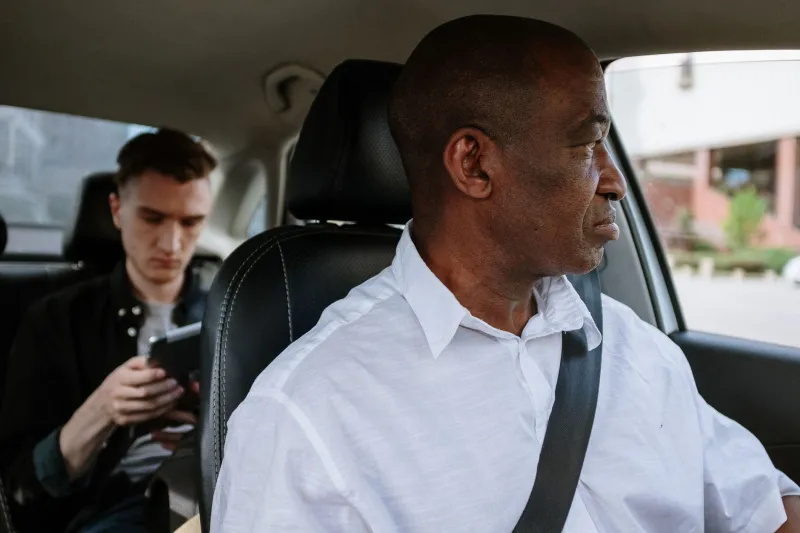
There's a perspective on Bay Area commuting that no app, no navigation system, and no transit blog can fully replicate — the view from behind the wheel, logged after thousands of hours on Hayward's streets.
Local taxi drivers see commuting patterns play out in real time, day after day. They know which habits make riders late, which booking decisions cost extra money, and which assumptions about Bay Area traffic are quietly wrong. We sat down with several experienced drivers who work the Hayward area regularly and asked them to be straight with us.
Here's what they said.
1. Booking Too Close to Departure Time on High-Traffic Days
This one comes up constantly. Riders who book a ride 10 minutes before they need to leave on a Friday afternoon, or the day before Thanksgiving, or during a Giants home game — they're setting themselves up for a bad time.
"People treat booking a taxi like ordering a pizza," said one driver who's been working the Hayward corridor for over eight years. "They think 15 minutes is plenty of time. But on a Friday before a long weekend, every driver in the East Bay is already spoken for. You're not getting a 15-minute pickup. You're getting whatever's left."
The fix is simple: for any trip that actually matters — a flight, a job interview, a medical appointment — book at least a day ahead. For routine commutes during predictable high-traffic windows, even a few hours of lead time makes a significant difference. Local taxi services, unlike app-based platforms, allow you to schedule in advance with a confirmed driver. Use that.
2. Trusting Regional Traffic Apps Over Local Knowledge
Google Maps and Waze are useful tools. They're also built on regional data aggregates that don't always reflect what's happening on a specific block in Hayward at a specific moment.
Drivers who know the city well understand that the stretch of A Street near the BART station behaves completely differently than the app predicts during school dismissal hours. They know which intersections near Mission Boulevard back up after a Caltrans crew shows up for maintenance. They know the back routes through the Tennyson corridor that shave real minutes off a trip without adding miles.
"I've had passengers show me their phone and say 'the app says go this way' while I'm already moving faster on a different route," one driver said, laughing. "By the time the algorithm figures out there's a problem, I've already gone around it."
When you're riding with someone who knows Hayward's streets personally, let them drive. The detour that looks longer on a map might be the one that gets you there on time.
3. Underestimating the Airport Window
Oakland International is close to Hayward — deceptively close. And that proximity leads to one of the most consistent mistakes drivers see: riders who leave too late because they assume OAK is a quick, painless trip.
It often is. But "often" isn't a word you want to gamble your flight on. Construction near the Hegenberger corridor, last-minute lane closures on 880, an unexpected backup at the airport entrance — any of these can turn a 20-minute trip into a 45-minute ordeal.
"I've had people in my cab who were completely relaxed, totally confident, and then went white when we hit a backup they didn't see coming," said one driver. "They booked an hour before departure. That's fine on a Tuesday morning in January. It's not fine on a Sunday afternoon in July."
The rule of thumb experienced Hayward drivers recommend: add 30 minutes to whatever you think you need for Oakland, and 45 for SFO. Then book your ride to match that buffer, not your optimistic estimate.
4. Ignoring the Real Peak Hours on Local Roads
Everyone knows morning and evening rush hours are bad. Fewer people realize that Hayward has its own micro-peak windows that don't align neatly with regional traffic data.
The industrial areas near the waterfront create mid-morning and early-afternoon shift-change traffic that surprises riders who've only thought about 8 a.m. and 5 p.m. School zone timing around Hayward Unified schools creates localized gridlock that can add 10 to 15 minutes to a route that looks simple on paper. Weekend afternoon traffic near Southland Mall and the surrounding retail corridors builds earlier than most people expect.
"The 7-to-9 and 4-to-7 windows are obvious," one driver noted. "But I see people get caught off guard by 11 a.m. on a Wednesday near the industrial park, or 2 p.m. on a Saturday near the mall. Those patterns are real, and they're consistent. You just have to know to look for them."
5. Treating Every Trip the Same Regardless of Destination
A ride to the Hayward BART station is not the same kind of trip as a ride to San Francisco International. A commute to a job in Fremont is not the same as a medical appointment in Oakland. But many riders plan for all of them with the same casual approach — book when you're ready, hope it works out.
Experienced drivers advocate for what they call "trip tiering" — mentally categorizing your upcoming rides by how much a delay would actually cost you. Low-stakes trips (grocery runs, casual errands) can afford a little flexibility. High-stakes trips (flights, interviews, medical procedures, important meetings) deserve advance booking, route discussion, and a realistic time buffer.
"I wish riders would just tell me upfront what's at stake," one driver said. "If you've got a flight, I'm going to drive differently than if you're just heading downtown. I'm going to plan differently. But I can only do that if I know."
The Takeaway
The drivers who navigate Hayward's streets every day are an underused resource. They know the city's rhythms in a way that no app has fully captured, and the insights they carry are genuinely useful — if you're paying attention.
The riders who do best aren't just the ones who book the right service. They're the ones who engage, communicate, plan ahead, and treat their transportation as a partnership rather than a vending machine. That shift in mindset, small as it sounds, is often the difference between a commute that works and one that doesn't.