When the Fog Rolls In, Local Knowledge Rolls Out: Why Hayward Drivers Have the Weather Beat
The Bay Area Has a Weather Personality — And It's Complicated
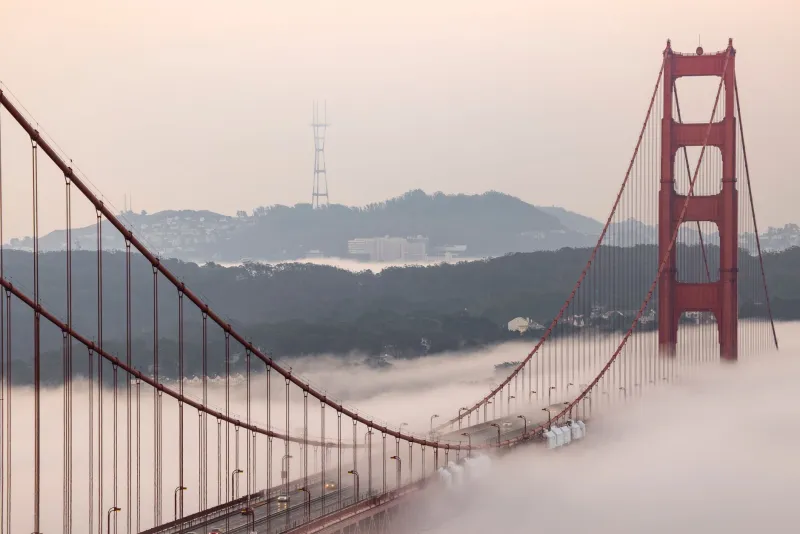
Anybody who's spent more than a week in Hayward knows the weather here doesn't exactly follow a script. You can wake up to clear skies, drive through a fog bank so thick you can barely see your hood ornament by 8 a.m., and then watch it burn off into a warm afternoon by noon. The Bay Area is famous for its microclimates — those hyper-local pockets of weather that make one neighborhood feel like a different city from the one just a few miles away.
For most people, this is just a quirk of living here. For a taxi driver who's been navigating these streets for years, it's a daily puzzle that apps and GPS systems simply aren't equipped to solve.
Ride-share algorithms are built on data. Traffic patterns, historical travel times, satellite mapping — it's all impressive stuff. But weather changes fast, and data lags. By the time an app figures out that the stretch of Mission Boulevard near the Hayward BART station is a nightmare because of standing water from an unexpected downpour, a local driver already knew to take a different route before the first drop fell.
What Fog Actually Does to a Commute — And What Apps Miss
Let's talk about fog, because it's the Bay Area's most underestimated commuting hazard. The stuff that rolls in off the bay isn't just a visibility issue. It creates wet road surfaces before any official rain ever shows up. It slows down freeway traffic in ways that GPS routing doesn't always account for in real time. And it has a habit of sitting in specific corridors — along the waterfront, around the industrial stretches near the port, and in low-lying areas near the Hayward hills — while leaving other streets completely clear.
An app sees a street on a map. A local driver sees that same street and knows from memory that it gets slick fast when the marine layer comes in, that the signal timing at a particular intersection gets tricky when visibility drops, and that there's a shortcut two blocks over that avoids the worst of it.
That's not something you can download. It's built through repetition, attention, and genuine investment in knowing a place.
Rain in the Bay: When Everyone Forgets How to Drive
There's a running joke in California that the first rain of the season turns every driver into a complete beginner. It's funny because it's true. After months of dry roads, a little precipitation creates outsized chaos — accidents spike, freeways clog, and the usual commute times can double or triple with almost no warning.
For Hayward commuters trying to get to Oakland, San Jose, or across the bay to San Francisco, this isn't a minor inconvenience. It's a genuine logistical problem. And the solutions an app offers — rerouting you onto surface streets that are already gridlocked, or cheerfully telling you your ETA is only twelve minutes when the reality is closer to forty-five — don't exactly inspire confidence.
Local taxi drivers who work these routes every day have a different kind of toolkit. They know which on-ramps back up first when rain hits. They know that cutting through certain parts of downtown Hayward can shave meaningful time off a trip when 880 is stacked. They've seen enough bad weather days to have a mental map of how the city moves — and how it stops moving — when things get wet.
The Hayward Hills and the Hidden Hazard
Here's something worth knowing if you're not from around here: the Hayward hills have their own weather system. On days when the flatlands are dealing with drizzle, the hills can be getting hammered with real rain, reduced visibility, and road conditions that demand genuine caution. Windy Ridge Road, Skyline Boulevard, and the residential streets that snake up toward Castro Valley can become genuinely treacherous when conditions deteriorate.
For riders heading to or from elevated neighborhoods, this matters a lot. An app doesn't know that a particular stretch of road up near the hills gets slippery in a way that demands a slower approach. A driver who's been up and down those roads for years does. That institutional knowledge is the difference between a smooth ride and a white-knuckle experience — or worse.
Surge Pricing and Storm Days: The Uncomfortable Truth
There's another weather-related issue that doesn't get talked about enough: what happens to ride-share pricing when conditions turn bad. Demand spikes, supply drops (because plenty of drivers don't want to be out in lousy weather), and surge pricing kicks in. The ride that cost you fifteen bucks on a sunny Tuesday afternoon might run you two or three times that on a stormy Friday evening.
Local taxi services don't operate on a surge model. The fare is what the fare is, regardless of whether it's raining sideways or the fog has grounded flights at Oakland. For commuters who rely on consistent, predictable transportation — especially those heading to early morning shifts or late-night pickups — that kind of pricing stability isn't a small thing. It's a real, practical advantage that adds up over time.
Trust Built Through Repetition
There's something worth saying about what experience actually looks like behind the wheel. It's not just knowing the streets — it's reading a situation and making good decisions fast. When weather turns bad, the variables multiply. Road conditions, visibility, traffic behavior, timing — a driver who's navigated all of it dozens or hundreds of times is going to handle it more smoothly than someone following a blue line on a screen.
Hayward taxi drivers aren't just familiar with the city in good conditions. They know it when it's at its most difficult. That's a different and more valuable kind of knowledge.
The Bottom Line When Conditions Get Ugly
Bay Area weather is going to keep doing what it does — which is to say, whatever it wants. The fog will roll in without warning, the rain will catch everyone off guard in October, and the hills will get slick on days when the flatlands barely see a drop. That's just life out here.
What you can control is who's behind the wheel when it happens. An app can give you an estimated arrival time and a star rating. A local driver can give you something more valuable: the confidence that comes from knowing exactly what they're doing, in the city they know best, no matter what the weather decides to throw at them.