Street Smarts Over Satellites: What Hayward Taxi Drivers Know That Your Phone Never Will
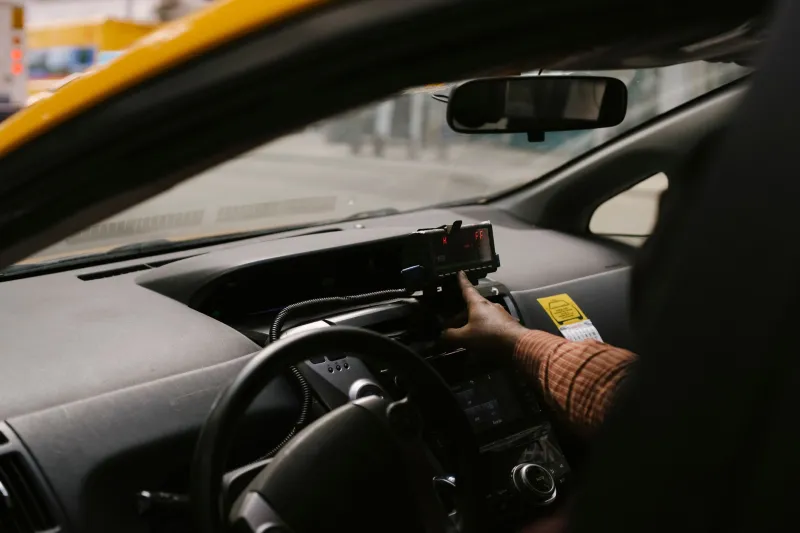
There's a moment every regular commuter recognizes. You're sitting in the back of a cab, watching the driver make a turn that your phone would never suggest — some quiet residential cut-through, a service road behind an industrial park, a left onto a street you've passed a hundred times without ever thinking to use. And then, ten minutes later, you're pulling up to your destination while the app-routed traffic behind you is still grinding to a halt.
That moment isn't luck. It's years of accumulated knowledge that no algorithm has figured out how to bottle.
The Limits of the Map
Mapping technology is genuinely impressive. Real-time traffic data, satellite imagery, crowd-sourced incident reports — it's a lot of horsepower working on your behalf every time you tap "navigate." But there's a fundamental gap between what a platform can measure and what a driver can know.
GPS systems work from data that already exists. They respond to congestion after it builds, reroute around accidents after they're reported, and flag construction zones after someone has entered the information into the system. They are, by design, reactive.
An experienced Hayward taxi driver operates differently. They're predictive. They know that the industrial stretch near the Hayward BART station backs up hard every Tuesday and Thursday when the shift change hits at a nearby warehouse complex. They know that rain — even light Bay Area drizzle — adds a reliable fifteen minutes to the 238 corridor because of how the on-ramps funnel. They know which school dismissal times create rolling slowdowns through certain neighborhoods, and they've already mentally mapped the block-by-block workaround before the first parent pulls out of the lot.
That's not data. That's experience. And it lives in the driver's head, not in any database.
Seasonal Patterns That Apps Simply Miss
The Bay Area has its own rhythm, and Hayward sits right in the middle of it. Longtime local drivers have watched that rhythm play out across hundreds of thousands of miles.
Take summer. When school lets out and weekend traffic shifts, the corridors connecting Hayward to the East Bay hills see a noticeable uptick from recreational drivers — people who don't commute regularly and don't know the flow. A driver who's been working these streets for years can feel that shift and adjust without waiting for Waze to catch up.
Or consider the stretch leading to Oakland International. Experienced drivers have a mental model of how OAK's departure surges interact with the Hegenberger Road approach — and they know exactly which alternate entry points cut the frustration without adding meaningful mileage. That knowledge was earned one trip at a time, not downloaded in an update.
Construction is another area where local drivers hold a clear advantage. Major road projects in the Bay Area can drag on for months, sometimes years. A driver who works a specific area daily develops a granular understanding of how a long-term construction zone evolves — which lanes open on which days, where flaggers tend to create unexpected delays, and how to sequence the surrounding streets to stay fluid. A GPS app sees the construction. A local driver understands it.
The Neighborhood Layer
Hayward is not a monolithic place. It's a collection of distinct neighborhoods, each with its own traffic personality. The streets around Cal State East Bay behave completely differently during finals week than they do in July. The industrial areas near the waterfront have their own truck-traffic rhythms. Downtown Hayward's grid has quirks — one-way streets, loading zones that effectively narrow lanes during business hours, intersections that back up in ways that don't show up cleanly on any map.
Drivers who have worked these areas for years carry a mental overlay of all of it. They know which blocks to avoid on street-cleaning days. They know where parallel parking creates a de facto lane reduction that apps don't account for. They know which intersections have signals with timing patterns that reward patience over aggression.
This neighborhood-level knowledge is genuinely difficult to replicate algorithmically because so much of it is hyperlocal and changes slowly over time. It requires being present, paying attention, and building a mental model through repetition — exactly what a career driver does.
Why It Matters More Than Ever
Bay Area traffic has become increasingly unpredictable over the past several years. Remote work reshuffled commute patterns. Infrastructure projects have cascaded across multiple corridors simultaneously. The region's roads are carrying the stress of a population that hasn't stopped growing even as its transit systems struggle to keep pace.
In that environment, the value of local expertise goes up, not down. When conditions are stable and predictable, a GPS can handle most of the routing work just fine. But when things get weird — and in the Bay Area, things get weird regularly — the driver who knows this area from the ground up has a meaningful edge.
There's also something to be said for the human judgment that experienced drivers apply in real time. A good driver is reading the road ahead, noticing the body language of merging traffic, sensing when a backup is about to clear or about to get worse. They're not waiting for an app to process a report. They're making calls based on pattern recognition built over years of doing exactly this.
What You're Actually Getting When You Ride Local
When you book a ride with a local Hayward taxi service, you're not just getting a car and a driver. You're getting access to a living, evolving map of this city — one that's been updated every single day by someone who actually drives these streets for a living.
That's not a romantic notion. It translates directly to shorter trips, fewer frustrating detours, and a more predictable arrival time. It means someone who can look at the clock, look at the conditions, and make a genuine judgment call rather than just following a blue line on a screen.
The algorithm is a useful tool. But the driver who knows Hayward? That's the real navigation system.
Next time you're running late for a flight out of OAK, heading to a meeting in the East Bay, or just trying to get home without losing your mind on the 880, consider who you want behind the wheel — someone executing a route, or someone who actually knows the way.