Every Solo Driver on 880 Is Part of the Problem — Here's the Data That Proves It
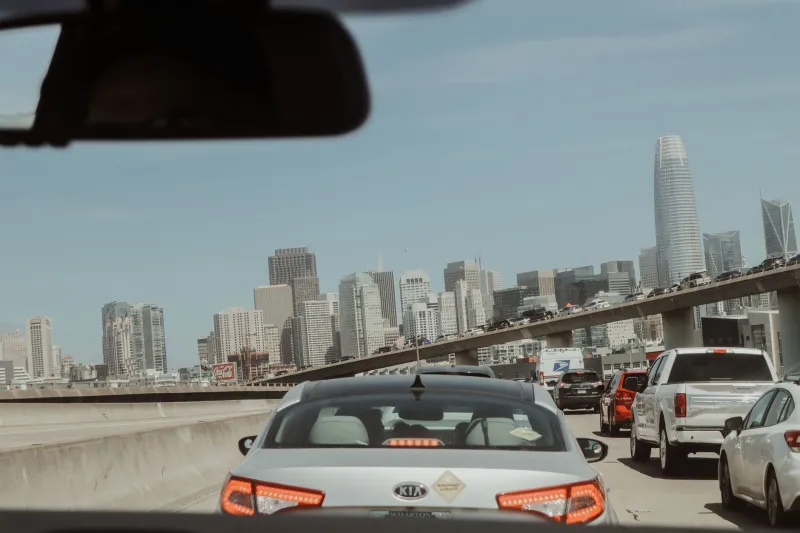
Picture the Nimitz Freeway on a Tuesday morning. Thousands of cars inching forward, most of them carrying exactly one person. It's a scene so familiar that most Bay Area residents barely register it anymore. But buried inside that gridlock is a climate story that California can't afford to ignore.
Transportation is the single largest source of greenhouse gas emissions in California, accounting for roughly 50% of the state's total carbon output according to the California Air Resources Board. And within that figure, passenger vehicles — particularly single-occupancy cars — carry an outsized share of the blame. The math isn't complicated: more cars, more emissions. What's surprising is just how dramatic the difference becomes when you start comparing solo driving to shared rides.
What One Car Trip Actually Costs the Atmosphere
The average passenger vehicle emits about 4.6 metric tons of carbon dioxide per year, based on EPA estimates for typical American driving patterns. In the Bay Area, where commutes tend to run longer than the national average — think Oakland to San Jose or Fremont to San Francisco — that number climbs. A commuter driving 30 miles roundtrip daily, five days a week, generates roughly 2.5 to 3 metric tons of CO2 from their commute alone.
Now multiply that by the roughly 3.5 million car trips taken across the nine-county Bay Area on any given weekday. The cumulative impact is enormous, and it feeds directly into the region's ongoing struggles with air quality alerts, particulate matter warnings, and the kind of smog that settles over the hills on hot September afternoons.
Shared transportation changes that equation fundamentally. When a taxi or ride service carries even two passengers on overlapping routes instead of two separate cars making separate trips, you've already cut the per-person emissions in half. Scale that up across dozens or hundreds of daily shared trips, and the numbers start looking genuinely meaningful.
The Rideshare Multiplier Effect
Here's something that doesn't get talked about enough: the environmental benefit of shared rides isn't just about the ride itself. It's about what happens to car ownership patterns over time.
Research from the University of California's Institute of Transportation Studies found that households with reliable access to taxi and ride services tend to own fewer personal vehicles. Fewer vehicles means fewer cars being manufactured, fewer tires being worn down, less motor oil being changed, and fewer end-of-life disposal problems. The lifecycle emissions of a car — from factory floor to scrapyard — are substantial, and every vehicle that doesn't get purchased because someone found a better commuting option represents a real environmental win.
For Hayward specifically, this matters. The city sits at a geographic crossroads between the East Bay's residential neighborhoods and major employment centers in Silicon Valley, San Francisco, and the broader peninsula. Residents here often face commutes in multiple directions, and the temptation to just drive — especially when BART doesn't run late enough or the bus route adds 45 minutes to the trip — is completely understandable. That's exactly where local taxi services fill a gap that public transit can't always cover.
California's Climate Goals and the Role of Every Trip
California has committed to carbon neutrality by 2045. Governor Newsom's executive orders and the state's climate action plans all point toward dramatic reductions in transportation emissions as a non-negotiable part of hitting those targets. The state has pushed hard on electric vehicles, and that's a meaningful piece of the puzzle — but EVs still require roads, still contribute to congestion, and still represent one car per person when the real efficiency gains come from reducing vehicles per trip, not just swapping fuel sources.
Shared transportation services — including local taxis — are part of the infrastructure that makes lower-car-ownership lifestyles actually viable. They're not a perfect solution, but they're a practical bridge between the car-dependent present and the cleaner transportation future that California is trying to build.
The Bay Area's Metropolitan Transportation Commission has long identified "vehicle miles traveled" reduction as a core strategy for emissions cuts. Every shared trip that replaces a solo drive moves that needle, however slightly.
The Air Quality Angle Hits Close to Home
For Hayward residents, this isn't abstract climate policy — it's a local health issue. The city has historically struggled with air quality challenges tied to its proximity to major freight corridors, the Port of Oakland, and heavy industrial activity in the surrounding area. Respiratory health disparities in communities along the 880 corridor are well-documented, and vehicle emissions from passenger cars compound the problem created by trucks and industrial sources.
Choosing not to add another solo car to that mix isn't just good for the planet in some distant, theoretical sense. It's a concrete contribution to the air quality of the neighborhood where you live, where your kids go to school, where your neighbors are trying to breathe.
Small Choices, Compounding Impact
Nobody's asking you to be a hero. The point isn't guilt — it's math. If you're already paying for a commute, already spending time in transit, and already navigating the stress of Bay Area traffic, choosing a shared ride or a local taxi service over a solo drive is one of the lowest-effort environmental choices available to you.
The infrastructure is there. The services exist. And every time someone in Hayward books a ride instead of firing up their own car, the aggregate impact — on emissions, on congestion, on air quality, on California's climate commitments — ticks in the right direction.
That Tuesday morning on 880 doesn't have to look exactly the same forever. It changes one trip at a time.