Lost in the Algorithm: How Ride-Share GPS Fails Hayward Riders Every Single Day
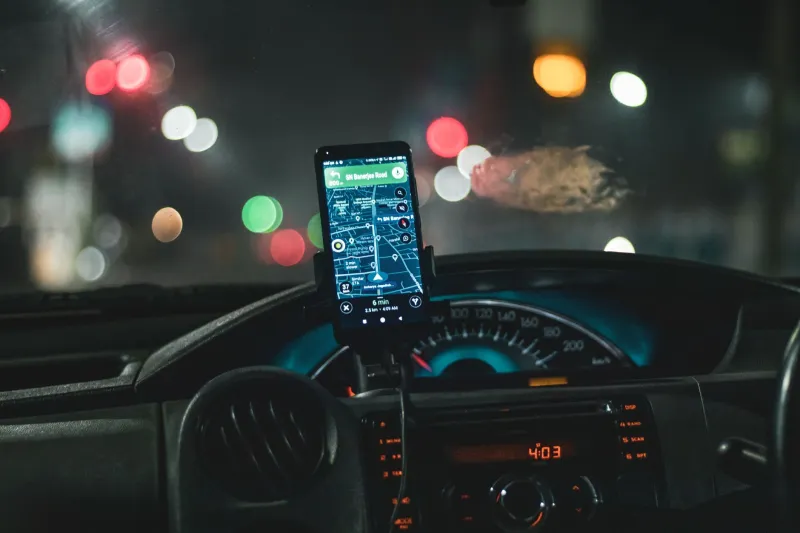
On paper, Hayward looks straightforward. A grid of numbered streets, a few major arterials, two BART stations, easy freeway access. Plug in a destination and the app spits out a route in seconds. Simple.
Except it isn't. And if you've spent any real time riding through this city, you already know that.
The gap between what a navigation algorithm thinks Hayward looks like and what Hayward actually is — at 7:45 on a Tuesday morning, or after a Giants game, or during a Tennyson Road backup — is wide enough to cost riders real money and real time, every single day.
Why Hayward Breaks Routing Algorithms
Navigation systems are only as good as the data they're built on. For major metros — central San Francisco, downtown Oakland, San Jose — that data is dense, constantly updated, and reasonably accurate. But Hayward sits in a geographic and demographic middle ground that mapping platforms have historically underserved.
Here's what the algorithm doesn't know:
The Tennyson corridor timing problem. Tennyson Road is one of Hayward's primary east-west connectors, but it behaves completely differently depending on the time of day, the day of the week, and whether school is in session. Apps that haven't been trained on granular, hyperlocal traffic patterns will route drivers down Tennyson at exactly the wrong moment — and riders pay for it in both fare and frustration.
The Mission Boulevard illusion. Mission looks like a fast north-south option. It is, sometimes. But it's also a commercial strip with irregular signal timing, frequent double-parking near certain blocks, and pedestrian crossings that slow things down significantly in ways that don't register as "traffic" in a standard app's data model. A driver who's worked these streets for years knows when Mission saves time and when it doesn't. An algorithm running on aggregate speed data often doesn't.
The BART station surge blindspot. South Hayward and Hayward BART stations create predictable, concentrated demand spikes that app-based systems handle poorly. Drivers unfamiliar with the area get funneled into the same pickup/dropoff patterns as everyone else, creating artificial bottlenecks. Local drivers know the adjacent streets that let you slip in and out without sitting in the same cluster as a dozen other vehicles.
The Residential Routing Problem
Hayward's residential neighborhoods are where the algorithm really struggles. The city has a patchwork of older subdivisions — particularly in the hills and in the Harder Road corridor — where street layouts don't follow the logic that mapping software expects.
Dead ends that look like through-streets on satellite view. Cul-de-sacs that share names with nearby roads. Private drives that get mistaken for public access. Steep hill roads in the upper neighborhoods that are technically drivable but add significant time compared to alternatives a local driver would instinctively choose.
App-based drivers, especially those who don't live in the area, follow the GPS instruction by instruction. When the instructions are wrong or suboptimal, they have no frame of reference to correct course. Local taxi drivers, by contrast, are pattern-matching against years of actual experience. They've made the mistake of following a bad route in that neighborhood once. They don't make it again.
What This Costs You Financially
This isn't an abstract complaint. Routing inefficiency has a direct dollar cost.
Ride-share pricing on most major platforms is calculated by a combination of time and distance. A route that adds five minutes and a quarter mile to your trip might only add a dollar or two on its own. But consider how often this happens — and compound it across a week of commuting, a month of airport runs, a year of rides.
There's also the surge pricing dimension. When an app-based driver takes a longer route through congestion that a local would have avoided, the rider is sometimes hit with time-based fare increases that wouldn't have occurred on a more efficient path. You're essentially paying a premium for the algorithm's ignorance.
Flat-rate and locally-priced taxi services operate differently. When a driver knows the efficient route, that efficiency is built into the fare — not subtracted from it after the fact.
The Airport Run as a Case Study
The trip from Hayward to Oakland International Airport (OAK) is a perfect microcosm of this problem. There are several viable routes depending on traffic, time of day, and current conditions on the Bay Bridge approaches. A knowledgeable local driver reads those conditions in real time and adjusts accordingly.
App-based drivers, particularly those who don't regularly work the East Bay, tend to default to whatever the app says — which is often the most obvious route, not the most efficient one. During peak travel windows, that can mean sitting in preventable congestion while the meter ticks.
Regular Haywards Taxi riders who make frequent airport runs report consistently shorter trip times compared to app-based alternatives — not because the cars are faster, but because the routes are smarter.
Local Knowledge Isn't Nostalgia — It's Infrastructure
There's sometimes a tendency to frame this as a generational preference — older riders who trust what they know, versus younger ones who trust their phones. That framing misses the point entirely.
Local knowledge is a form of infrastructure. It's the accumulated result of thousands of trips through the same streets, across different conditions, over many years. It doesn't live in a database. It lives in the driver's head, and it's constantly updated by real-world experience in a way that no algorithm has yet matched.
For a city like Hayward — complex, layered, perpetually in flux — that knowledge isn't a nice-to-have. It's the difference between a ride that works and one that wastes your time.
The Bottom Line
If your app-based rides through Hayward feel longer than they should, or if you've watched your driver take a route that made no intuitive sense, you're not imagining it. The algorithm is doing its best with incomplete information. Your local driver is doing better — because they actually know where they're going.
Haywards Taxi connects riders with drivers who have navigated this city long enough to know it the way no map ever will. Book your next ride at haywardstaxi.com.